
Polokwane, Limpopo — FETSI Grad Elevate 2025 at the University of Limpopo was not simply an event on the academic calendar. It was a defining moment for a generation of emerging technologists navigating the realities of Africa’s rapidly evolving digital economy.
In collaboration with the Department of Computer Science, FETSI Impact Hub brought its Grad Elevate platform to life through an invite-only experience designed to bridge the persistent divide between academic excellence and real-world readiness. Focused on Data Science, Artificial Intelligence, Cybersecurity, Analytics, Digital Governance, and Financial Literacy, the programme delivered more than inspiration — it delivered activation.
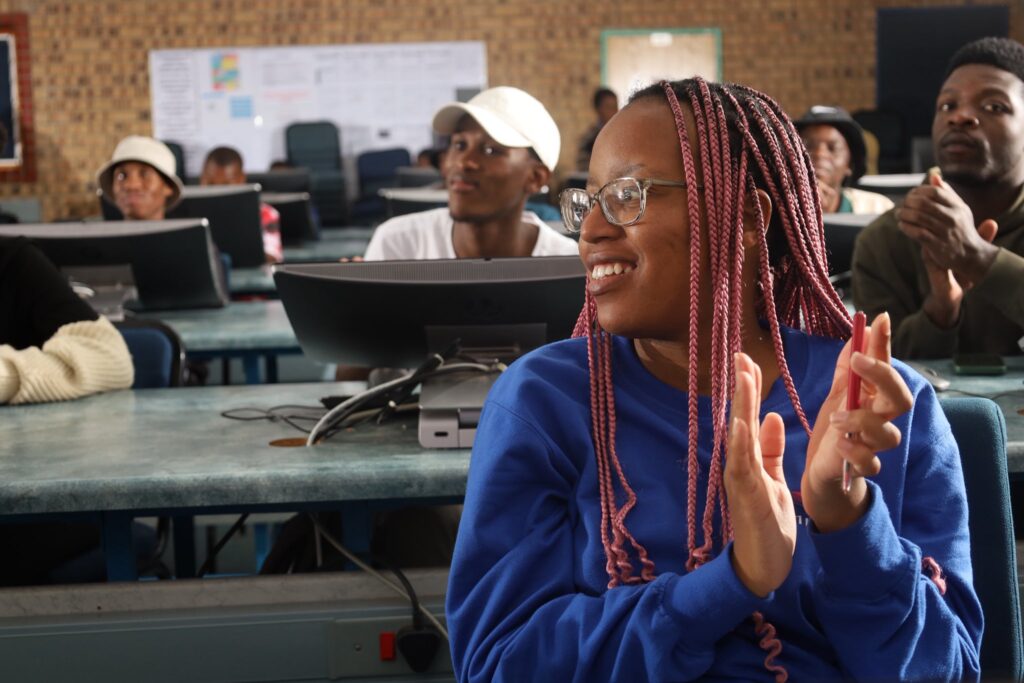
From the moment the sessions began, it was clear this was not going to be a traditional lecture-style engagement. The energy in the room was charged with curiosity and urgency. Students were not treated as passive recipients of advice but as future architects of Africa’s digital systems.
Madidimalo Joel Seabi, ICT Director at Limpopo Treasury, opened a powerful window into the inner workings of public sector technology. His address on building secure and smart governments in the age of AI and cybersecurity challenged students to see their technical skills as tools for national development. He unpacked how ICT protects public funds, strengthens governance systems, and powers service delivery, urging graduates to build for people, not just platforms. For many in the room, it was the first time government technology had been presented as a dynamic and impactful career pathway.
Cybersecurity specialist Emanuel Dikotla followed with a deep dive into database security and digital resilience. His session grounded the conversation in the realities of protecting infrastructure in a hyperconnected world. As he spoke about ethical system design and the responsibility that comes with handling data, one message resonated clearly: protecting data is inseparable from protecting futures. Students began to see cybersecurity not as a backend function, but as a pillar of economic and social stability.
Innovation strategist Edgar Lebepe shifted the conversation toward equity. Speaking from his work within Limpopo’s Digital Innovation ecosystem, he dismantled the myth that innovation is reserved for the privileged few. His call was direct and unapologetic — innovation must be inclusive. By framing technology as a vehicle for community upliftment rather than elite advancement, he reframed how students viewed their own potential impact within underserved communities.
AI visionary and data architect Julien Nyambal expanded the lens even further. Drawing from his experience designing large-scale systems across the continent, he reminded students that while automation is accelerating, human value remains irreplaceable. Technical competence may open doors, he noted, but communication, clarity, and strategic thinking keep professionals at the table. In an era dominated by code and algorithms, his emphasis on human intelligence as a competitive advantage landed powerfully.
For many students, Sekwaila Bopape’s story struck the deepest chord. Representing Limpopo on the global stage as a data analyst in the United Kingdom, he dismantled limiting narratives about geography and access. Breaking into tech from outside traditional spaces, he explained, requires vision and disciplined follow-through. His presence embodied proof that global relevance can be cultivated from local beginnings.
The conversation around purpose reached new depth with Dr. Kwena Thema, PhD, whose session titled “Purpose Over Prestige” challenged students to redefine success. With a journey stretching from Seshego to impact across the SADC region, he demonstrated that academic excellence is most powerful when it uplifts communities. Education, he argued, is not merely a personal achievement but a communal responsibility. His call for purpose-driven leadership reframed ambition as something larger than individual advancement.
Perhaps one of the most unexpected yet critical dimensions of the day came through Ofentse Montshiwe, founder of Mjojo Finance Play. Through storytelling and theatre-infused delivery, she addressed a topic often missing from technical education: financial literacy. In a world captivated by AI and coding skills, she reminded students that financial wisdom is freedom. A sustainable digital career requires not only technical power but the ability to manage income, plan strategically, and build long-term stability. The room leaned in as she reframed money management as a survival skill for the digital age.
What unfolded across the sessions was not a series of disconnected talks, but a cohesive narrative about ownership. Ownership of skills. Ownership of purpose. Ownership of systems. Ownership of futures.
By the closing moments, the transformation was visible. Students who had entered quietly were now asking direct questions about internships, innovation pipelines, postgraduate pathways, and startup ideas. Conversations spilled into corridors. Networks were forming in real time. Something had shifted from passive attendance to intentional engagement.
FETSI Grad Elevate 2025 at the University of Limpopo demonstrated the power of structured exposure. When students are given access to real-world voices rather than abstract titles, clarity emerges. When they see professionals who look like them building systems that matter, belief expands. When they are equipped with both technical insight and life skills, confidence deepens.
This is the value proposition of FETSI Grad Elevate.
It strengthens workforce readiness by aligning academic training with industry and public sector expectations. It builds a pipeline of digitally skilled graduates who understand governance, cybersecurity, ethical AI, innovation, and financial sustainability. It fosters inclusive participation in the digital economy, particularly for students outside metropolitan centers. Most importantly, it creates measurable impact by converting exposure into activation.
In a skills economy where too much talent remains underexposed, FETSI Grad Elevate is a direct intervention. It levels the playing field by placing access, insight, and actionable guidance directly into students’ hands.
The University of Limpopo Edition did not simply explore what the future looks like. It broke down how to thrive in it.
FETSI Impact Hub’s message is clear: Africa’s digital future will not be built by accident. It will be built intentionally — by graduates who understand systems, purpose, equity, security, and sustainability.
And in Polokwane, that future began taking clearer shape.