Breaking Barriers: Tech for Disability Inclusion in Africa’s Digital Future
FETSI Digital Futures Summit 2025
At the heart of Africa’s digital revolution lies a powerful truth: inclusion is not charity — it’s innovation.
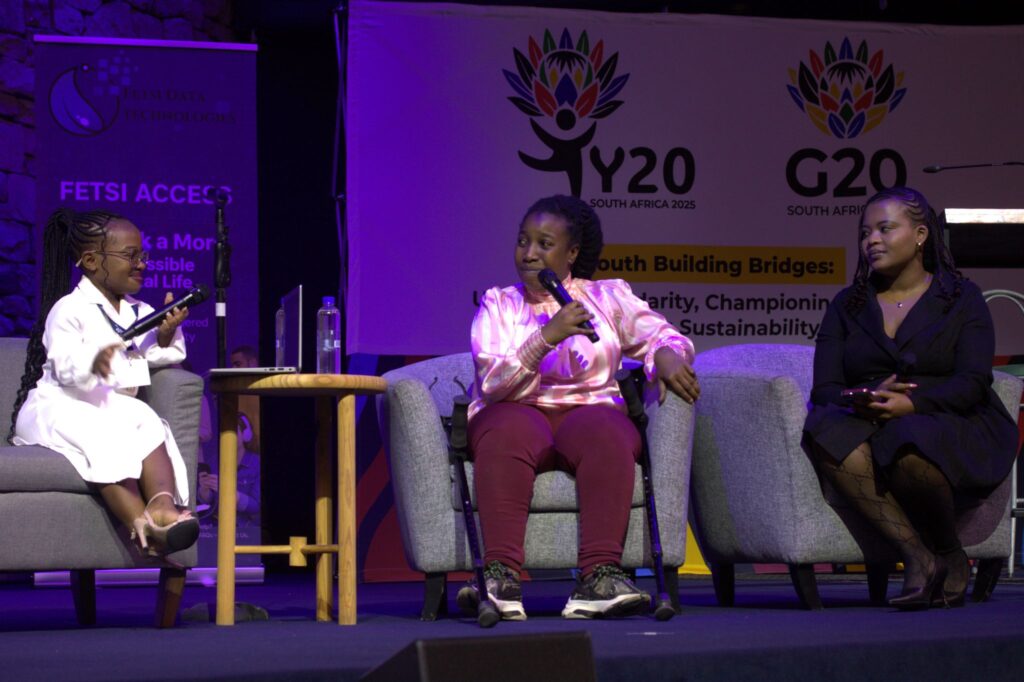
This message resonated strongly during the “Breaking Barriers: Tech for Disability Inclusion in Africa’s Digital Future” panel at the FETSI Digital Futures Summit 2025. The session brought together leading voices in academia, community advocacy, and telecommunications to challenge assumptions, expose systemic barriers, and reimagine accessibility as a growth strategy for Africa’s digital transformation.
Confronting the Invisible Barriers
Dr. Babalwa Tyabashe-Phume (University of Johannesburg), Nkateko Emily Mabasa (Phoenix in Alexandra), and Mosa Kuape (Vodacom Lesotho) unpacked the everyday realities faced by people living with disabilities across the continent.
From inaccessible ATMs and office buildings to mobile applications that ignore assistive technology users, the panel revealed how digital and physical systems often exclude by design — not by intention, but by oversight. The consequences are profound: limited access to financial services, restricted employment opportunities, and barriers to full participation in society.
“Nothing about us, without us,” echoed as a central theme — a reminder that disability inclusion must involve those directly affected in both design and decision-making processes.
Reframing Inclusion as Innovation
Rather than positioning accessibility as a compliance exercise or corporate social responsibility initiative, the panel reframed disability inclusion as a strategic opportunity.
With over 1.3 billion people globally living with disabilities, inclusive design represents one of the largest untapped markets in the world. When products, platforms, and services are designed for universal access, they benefit everyone — from the elderly and rural users to individuals with temporary impairments.
“Disability inclusion is not a tick-box — it’s a growth strategy,” the panel emphasized.
By embedding accessibility into the foundation of digital systems — rather than adding it as an afterthought — African innovators can create scalable, user-centred solutions that drive economic participation and social equity.
Ubuntu-Driven Technology for a Digital Africa
Grounded in the African philosophy of Ubuntu — “I am because we are” — the discussion highlighted the need for collective responsibility in shaping inclusive digital ecosystems.
Technology, the panel argued, should simplify life, expand opportunity, and strengthen dignity.
“Tech should make life easier, not harder — for everyone.”
This means:
Designing apps compatible with assistive technologies.
Ensuring public infrastructure is physically accessible.
Embedding accessibility standards in procurement and regulation.
Building inclusive innovation ecosystems that centre lived experiences.
A Call to Action
The session closed with a powerful call for cross-sector collaboration — between government, academia, industry, and civil society — to make disability inclusion a measurable priority in Africa’s digital transformation agenda.
As Africa accelerates toward a technology-driven future, the question is no longer whether we can afford to invest in accessibility. It is whether we can afford not to.
At the FETSI Digital Futures Summit 2025, one message was clear:
A truly digital Africa is one where innovation is inclusive by design and where no one is left behind.

- Rated Excellent by our growing community
The Ultimate Standard for Economic Digital Inclusion
Developing Africa’s next generation of digital talent.
Your future in tech starts at Fetsi Impact Hub. Apply today and take your place in building inclusive, sustainable economic growth through technology.
Site Links
- info@fetsihub.co.za
- +2783 5129 131
- Gauteng: Oak Avenue Office Park: 376 Oak Avenue, Ferndale, Randburg 2188 South Africa
- Limpopo: Ladanna St Annadale, Polokwane, 0699
About Us
Local Events
Programmes
Find your Training Program